


A client came to me a few weeks ago with a problem I hear constantly. His consulting work was lumpy. Good quarter, quiet quarter, good quarter. Almost all of it came through channel partners he could not control, and only five or six of them ever passed him anything.
So we did something simple. We analysed what he already had.
He had spoken to, proposed to or worked with around 30 to 50 direct client organisations in the last couple of years.
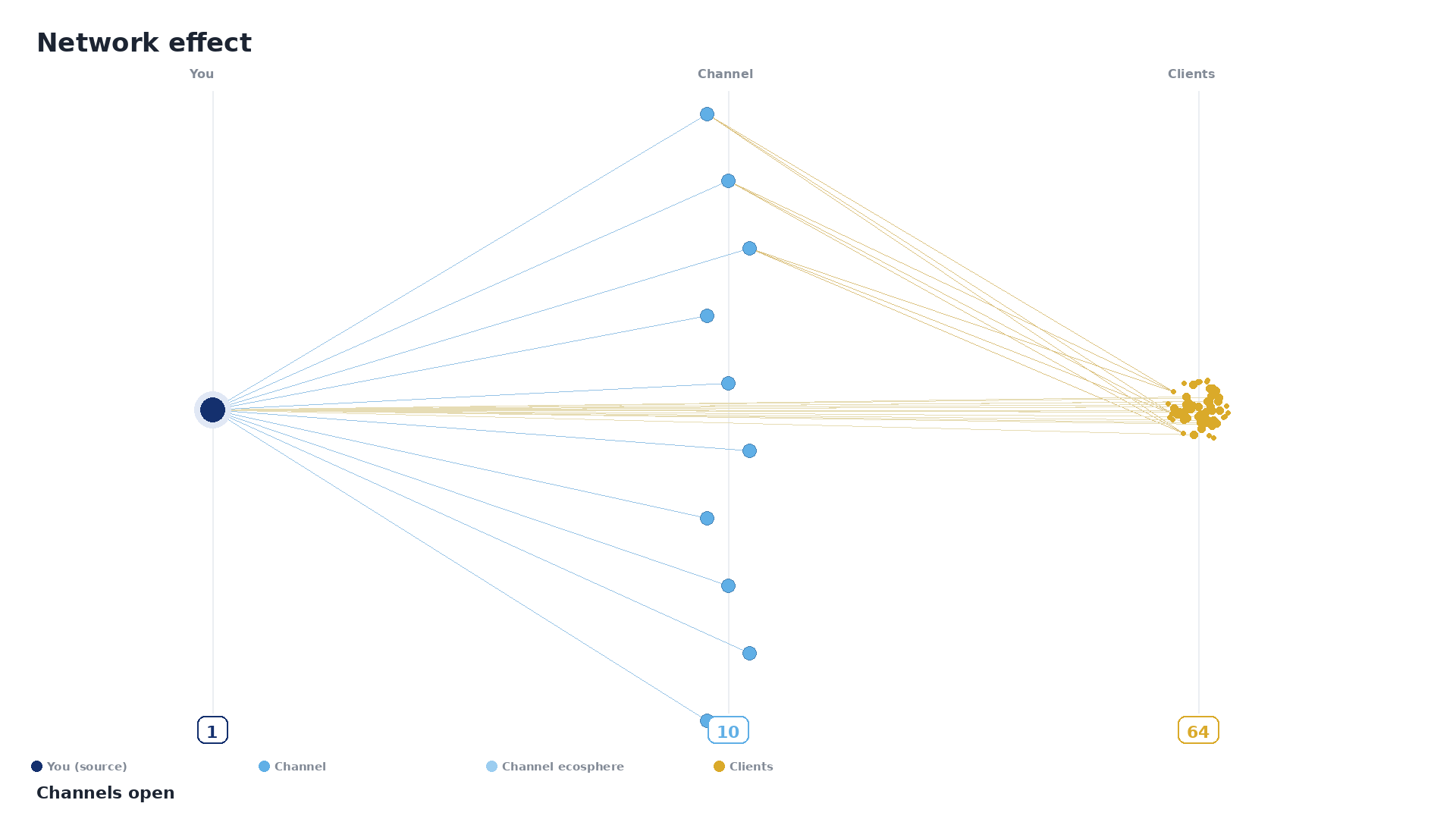
He had relationships with roughly ten channel partners. Inside two of those partners, he had a working email address, because he operated under their umbrella. That partner employed about 50 account managers. He had met two of them.
Another partner, same story. Internal email address, around 80 account managers none of them contacted.
He walked in thinking he had two partner relationships. He walked out with a list of about 150 people who could put him in front of the exact clients he wanted, and a warm way to reach every one of them. Each of them owned the relationship with his ideal client and each one could improve their clients situation if they introduced him.
Here’s the frustration. You know you need a steadier pipeline. So you read the advice, and the advice is always the same.
Post every day.
Build an audience.
Become the expert people come to.
Learn LinkedIn.
Learn cold outreach.
That is a two-year project, and you need clients this quarter.
So you keep taking whatever comes your way and you keep having lumpy years.
The real problem is not that you lack an audience. It is that you have never counted the relationships you already own, so you have been working a thin sliver of them.
Here is how to run this particular play.
1. List every potential client you have ever engaged with. Open a blank spreadsheet. Go through your email, your calendar, your old proposals and your invoices. Write down every company you have worked with, pitched to, or had a proper conversation with. Most consultants land somewhere between 30 and 80. Do not judge the list yet. Just get it out of your head and onto the page.
2. List every channel partner/referrer, then work out the size of the whole market. A channel partner is any organisation that already has a relationship with the clients you want. Agencies, software vendors, accountants, larger firms that subcontract. Write down the ones you have spoken to. Then ask a harder question: how many of these exist in total? My client had spoken to ten. There were about a hundred in his market. He had never cultivated ninety of them.
3. Count the people inside each partner, not the partner. This is the step everyone skips. A partner is not one relationship. It is every account manager, partnership manager and consultant who talks to clients on their behalf. Look each partner up on LinkedIn and count the client-facing people. My client’s “two partners” became 130 people. Add a column for how warm each person is: worked with, met once, never spoken to.
4. Give them a reason to talk to you this month, not eventually. A list of names does nothing on its own. Account managers are busy and they hear from suppliers all the time. You need something that makes this week different from last week. In my client’s case, his industry was going through a major shift, the biggest he had seen in 25 years, and their clients needed help with it right now. Find your version. A regulation change, a new tool, a deadline, a problem you have just solved for someone similar. Write it in one sentence.
5. Start with the warm ones, and reach them where you already have access. Sort the sheet warmest first. If you have an internal email address at a partner, use it. If you have met someone once, remind them where. Send ten short messages a day, each one leading with the reason from step four. No pitch decks. Just: here is what is changing, here is who I have helped with it, would a 20-minute call be useful?
Picture what changes when you have 150 people passing you opportunities instead of six.
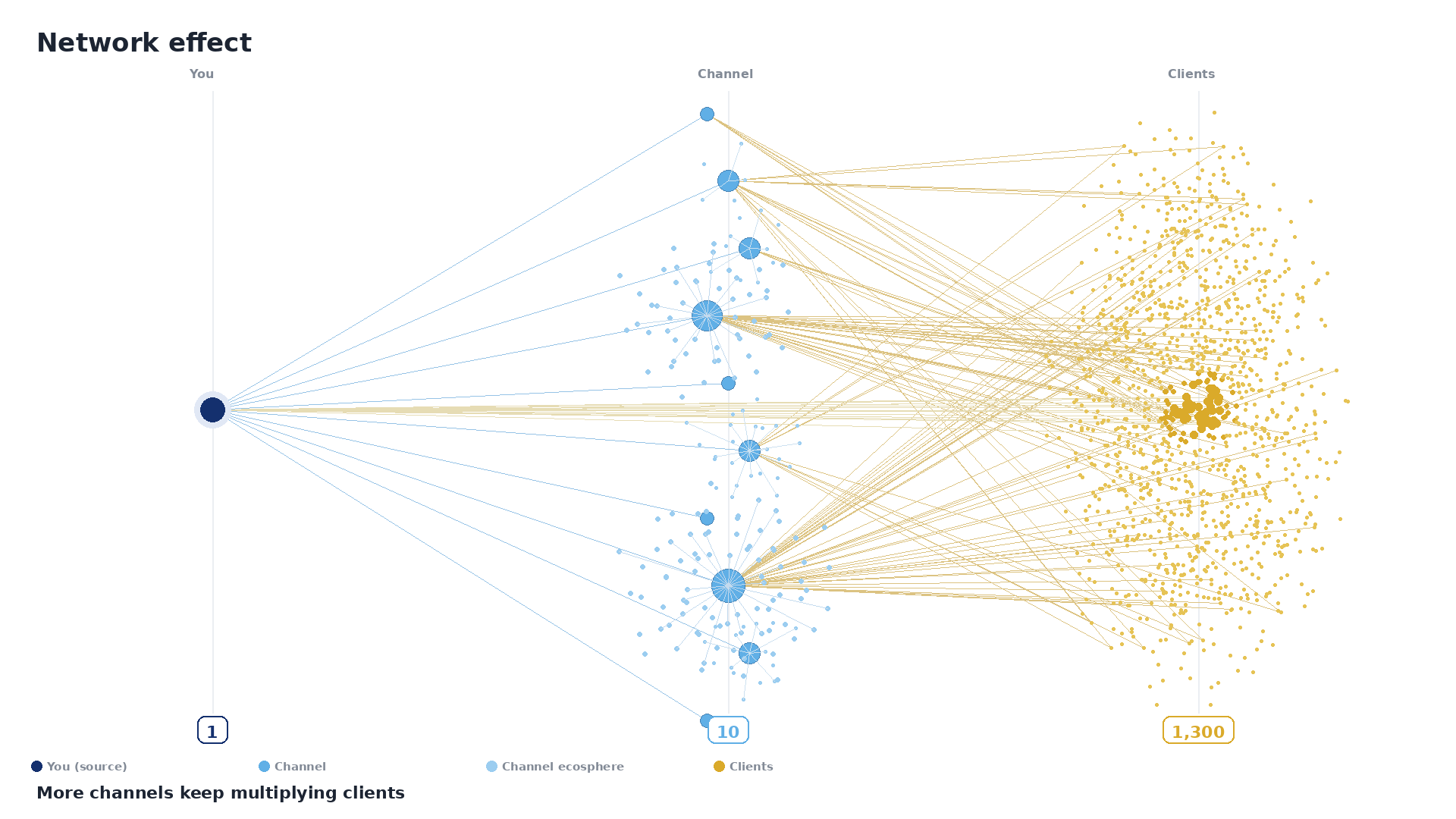
The lumpiness goes. Not because you found a magic channel, but because no single relationship can dry up and take a quarter with it.
You stop waiting for the phone to ring and start choosing which conversations to have. And you did it without writing a single LinkedIn post.
If you would rather not build and maintain this count yourself, that is what Nynch does: it maps the people you already know, scores how warm each one is, and tells you who to contact this week. But the spreadsheet works. Start there.
Do the count this week. I would genuinely like to hear what number you land on.
If you want to shortcut time to revenue on tactics like this you can:
Talk to me about being an early adopter of Nynch
I’m currently opening spots for 1 to 1 work with me where we build out your Business Dev’t process together. This is for you if you want to add an additional £100K in revenue and will commit to do the work to get it. Reach out here